No, You Haven’t Suddenly Dropped to 6% Body Fat
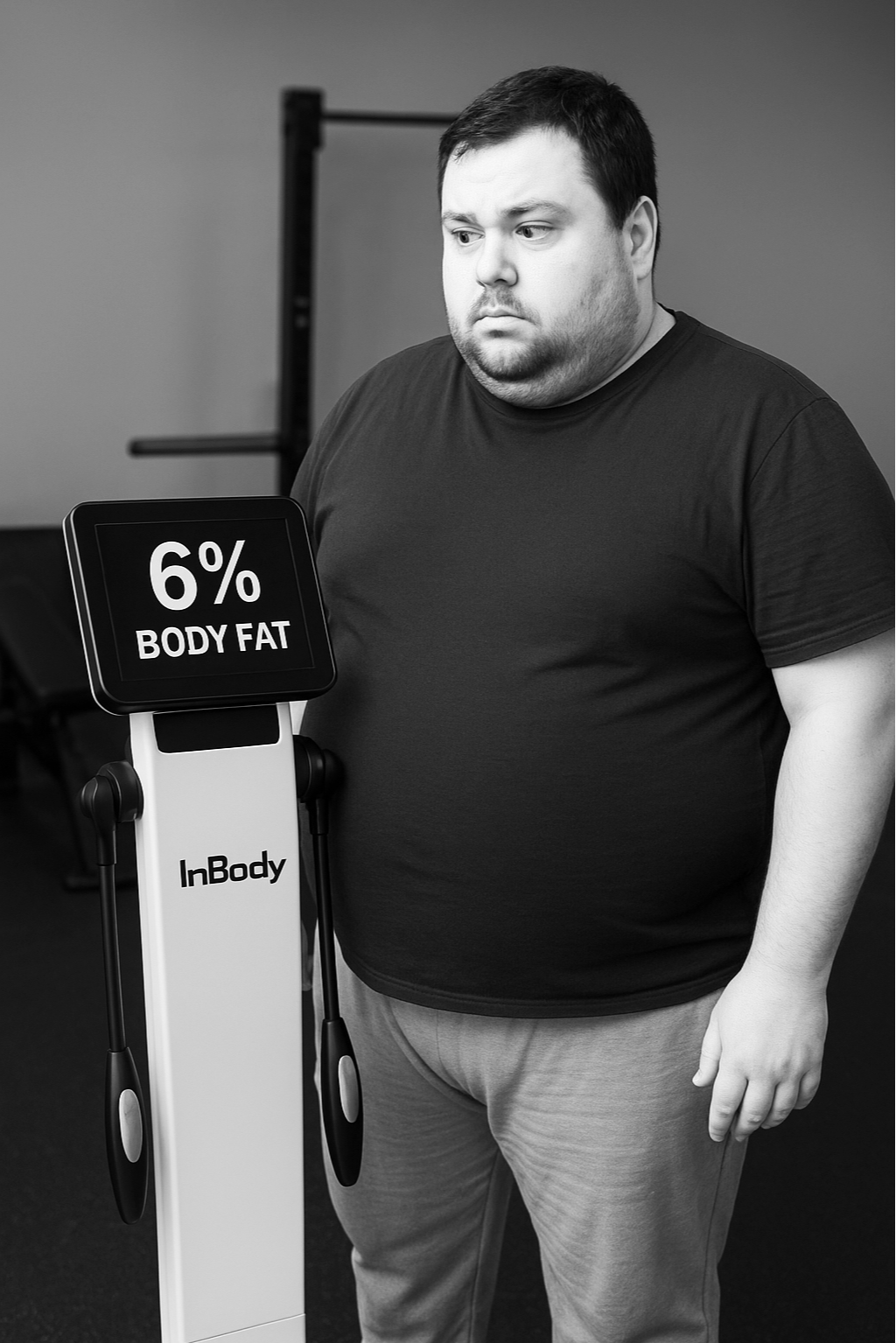
So, you’ve been training hard, eating better, and just stepped off the InBody scanner, and suddenly, it tells you that you’re 6% body fat.
First thought: Amazing!
Second thought (after a few days of eating normally): Wait, now it says 10%… what happened?
Before you start questioning your nutrition plan, your trainer, or your entire life, let’s look at what’s really going on.
Understanding how body composition scans work (and what affects them) will help you interpret the results more accurately, and save you from unnecessary panic or false excitement.
How Body Scanners Actually Work
Most modern scanners, including the InBody, use something called bioelectrical impedance analysis (BIA).
In simple terms, the machine sends a very small electrical current through your body and measures how easily that current travels.
Water conducts electricity easily.
Fat resists it.
From that, the scanner estimates your muscle mass, fat mass, and total body water.
That means your results can fluctuate, not because you’ve lost or gained fat overnight, but because your hydration, temperature, food intake, and recent activity have changed the way electricity moves through your body.
Why Your Results Can Change So Much
Here are some of the most common factors that can make your scan look “off”:
Exercise
If you scan after training, blood and water are concentrated in your working muscles.
That lowers impedance, which makes the scanner think you’re leaner.
So yes, you’ll often look “better” after a workout, but it’s mostly fluid shift, not instant fat loss.
Body Temperature
Warm environments, a hot shower, or even a sauna can cause your body temperature to rise, which again reduces impedance and makes you appear leaner.
On the other hand, if you’ve been out in the cold, you might temporarily appear to have more body fat.
Food & Hydration
Eating and drinking add weight and change your water balance, both of which influence your scan.
Studies show readings can vary by nearly 10% throughout the day, depending on meal timing and hydration.
So scanning after breakfast will give you a different number than scanning first thing in the morning, fasted.
Toilet Habits
It sounds basic, but yes, whether you’ve been to the toilet can affect your reading slightly. Emptying your bladder or bowels can lower your body weight and slightly alter impedance.
Menstrual Cycle
For women, hormonal shifts across the cycle change water retention.
During the luteal phase (the two weeks before your period), increased progesterone can cause fluid retention, making body fat readings appear higher.
The follicular phase (days 1–14) tends to be more stable for consistent scans.
Should you just skip it?
If your results suddenly change by a few percent, it doesn’t necessarily mean your training or diet stopped working.
It might just mean you scanned at a different time of day, in a warmer room, after a workout, or before breakfast instead of after lunch.
The key to meaningful data is consistency.
Try to scan at the same time of day.
Ideally, do it fasted, after using the toilet, and before exercising.
For women, try to scan during the same phase of your cycle each time.
That way, your results will tell you what’s actually changing, not just what’s temporarily shifted due to water, temperature, or timing.
Look for Trends - Cross-Examine Findings
Body composition scans are best viewed as a trend tracker, not a one-off test.
If you’ve been training for six weeks and eating well, your progress is probably real, even if one scan looks “off.”
What matters is the direction over time: muscle mass gradually increasing, body fat gradually decreasing.
So next time your scan tells you something unexpected, remember:
You didn’t gain 3kg of fat in a week. And no, you haven’t hit 6% body fat overnight.
Focus on trends over time
Is your lean mass gradually increasing?
Compare like with like. Under the same conditions, using the same machine, and at the same time.
Combine the data with mirror checks, performance metrics, and photos.
Remember: The scanner is a tool, not a truth detector.

If after 6 months of training, you’ve added 20kg to your squat, learnt pull-ups, can run faster, look and feel better, but the InBody says you’ve lost muscle and gained fat, ignore it and retest some other time.
When tracking progress, not all methods are equal.
Performance metrics (how much you lift, move, or endure) are the best indicators of real change.
Circumference measurements come next, showing clear shifts in muscle and fat when done consistently.
Progress photos are also valuable, revealing changes that numbers can miss.
Skinfold callipers can work if used correctly, but small errors or hydration can throw them off.
Finally, scanners like InBody are convenient but easily influenced by water, temperature, and timing. The best approach is to combine methods, use performance, measurements, and photos as your main tools, and treat scans as a helpful extra, not the full story.
Stay consistent, look at the bigger picture, and trust the process; the data will catch up.